
Haritaki, botanically known as Terminalia chebula, is one of the most revered medicinal herbs in Ayurveda. It is a key ingredient of the classical formulation Triphala, along with Amalaki (Emblica officinalis) and Vibhitaki (Terminalia bellerica). Due to its wide therapeutic utility, Haritaki is often referred to as the “King of Medicines” in Ayurveda
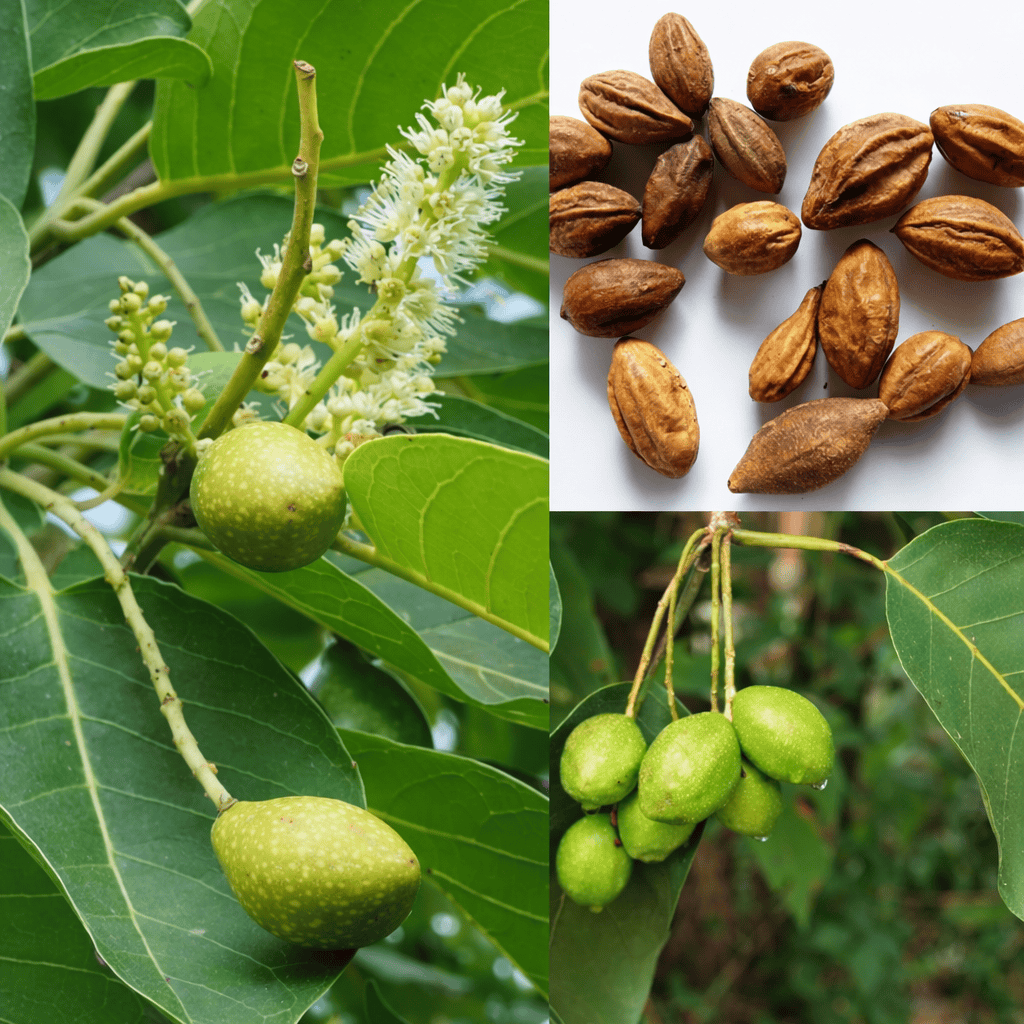
Mythological Origin of Haritaki
पपातबिन्दुर्मेदिन्याम्शक्रस्यपिबतोअमृतम्।
ततोदिव्यात्समुत्पन्नासप्तजातिर्हरीतकी II
(Bhavaprakasha Nighantu)
According to Ayurvedic mythology, when Shakra (Indra) was drinking Amrita (nectar), a drop fell onto the earth. From that divine drop emerged Haritaki, manifesting in seven varieties.
Botanical Profile
· Botanical Name:Terminalia chebula
· Family: Combretaceae
Vernacular Names
· English: Chebulic Myrobalan
· Hindi: Harad, Harade
· Kannada: Alale kai, Anale kai
· Konkani: Ordo
· Marathi: Harada, Hirad
· Malayalam: Katukka
· Telugu: Karakkaya
· Tamil: Kadukkai
· Bengali: Haritaki
· Gujarati: Harade
· Assamese: Hilika
· Manipuri: Manahi
· Persian: Haleel
· Arabic: Haleelaz
Sanskrit Synonyms and Their Meanings
हरीतक्यभयापथ्याकायस्थापूतनामृता।
हैमावत्यव्यथाचापिचेतकीश्रेयसीशिवा॥६॥
वयस्थाविजयाचापिजीवन्तीरोहिणीतिच॥७॥
(Bhavaprakasha)
· Abhaya: Removes fear of diseases
· Pathya: Cleanses body channels
· Kayastha: Always beneficial internally
· Putana: Purifies by purgation
· Amrita: Acts like nectar (rejuvenative)
· Chetaki: Enhances intellect
· Shiva: Brings auspiciousness
· Vayastha: Prevents aging
· Vijaya: Conquers diseases
· Jeevanti: Promotes longevity
· Rohini: Heals wounds
Ayurvedic Properties of Haritaki
· Rasa (Taste): Madhura, Amla, Katu, Tikta, Kashaya (except Lavana)
· Guna: Laghu (Light), Ruksha (Dry)
· Veerya: Ushna (Hot)
· Vipaka: Madhura (Sweet)
Therapeutic Benefits of Haritaki
व्रण्यंउष्णंसरम्मेध्यम्दोषघ्नंशोथकुष्ठनुत्।
कषायंदीपनंचाम्लंचक्षुष्यंचाभयाफलम्॥
(Sushruta Sutrasthana)
हरीतकीपन्चरसाऽलवणातुवरापरम्।
रूक्षोष्णादीपनीमेध्यास्वादुपाकारसायनी॥
चक्षुष्यालघुरायुष्याबृंहणीचानुलोमनी।
श्वासकासप्रमेहार्षःकुष्ठशोथोदरक्रिमीन्॥
(Bhavaprakash)
Major Benefits
1. Varnya: Improves complexion
2. Saram: Gentle laxative
3. Medhya: Enhances intelligence
4. Dosha-hara: Balances all three doshas
5. Shothahara: Reduces inflammation
6. Kusthahara: Useful in skin disorders
7. Deepana–Pachana: Improves digestion
8. Chakshushya: Improves eyesight
9. Rasayana: Anti-aging and rejuvenating
10. Ayushya: Promotes longevity
11. Brihmana: Nourishes body tissues
12. Anulomana: Regulates bowel movements
13. Shwasa–Kasa: Relieves asthma and cough
14. Pramehahara: Helps manage diabetes
15. Udara: Beneficial in ascites
16. Krimighna: Anthelmintic
Types of Haritaki (Seven Varieties)
Type | Region | Key Features | Use |
Vijaya | Vindhya | Round fruit | Best for all diseases |
Rohini | Maharashtra | Round fruit | Wound healing |
Putana | Sindhu region | Fibrous shell | External use |
Amrita | Campa region | Thick pulp | Panchakarma |
Abhaya | Campa | Five ridges | Eye disorders |
Jeevanti | Saurashtra | Golden fruit | Longevity |
Chetaki | Himalayas | Three ridges | Best for powder |
सप्तनामपिजातीनाम्प्रधानाविजयास्मृता।
सुखप्रयोगासुलभान्सर्वरोगेषुशस्यते।
(Bhavaprakasha)
➡ Vijaya Haritaki is considered the best due to easy availability and broad applicability.
Haritaki as a Natural Purgative
Some varieties of Haritaki produce purgation merely by tasting, some by smell, some by touch, and others even by sight.
Persons who remain in the shade of the Chetaki tree experience immediate purgation; the same effect is observed in animals and birds. When Chetaki is simply held in the hand, purgation occurs due to its Prabhāva (specific potency).
Chetaki is the best purgative for individuals of tender constitution, the emaciated, and those who dislike medicines, as it acts gently and requires no active ingestion.
Ritu Haritaki (Seasonal Intake of Haritaki)
सिन्धूत्थशर्कराशुन्ठीकणामधुगुडैःक्रमात्।
वर्शादिषुअभयाप्राश्यारसायनगुणैषिणा॥
(Bhavaprakash)
Ritu Haritaki is a Rasayana regimen where Haritaki is taken with different adjuvants according to seasons:
Season | Combination |
Varsha (Monsoon) | Haritaki + Saindhava Lavana |
Sharad (Autumn) | Haritaki + Sugar |
Hemanta (Early winter) | Haritaki + Dry Ginger |
Shishira (Winter) | Haritaki + Pippali |
Vasanta (Spring) | Haritaki + Honey |
Greeshma (Summer) | Haritaki + Jaggery |
👉 Dose: 3 g Haritaki churna with equal quantity of adjuvant
Contraindications of Haritaki
अजीर्णिनोरूक्षभुजःस्त्रीमध्यविषकर्शिताः।
सेवेरन्नाभयामेतेक्षुत्तृष्णोष्णार्दिताश्चये।
(Charaka Chikitsa)
तृष्णायाम्मुखशोषेचहनुस्तम्भोगलग्रहे।
नवज्वरेतथाक्षीणेगर्भिण्यांनप्रशस्यते॥
(Dhanvantari Nighantu)
Due to its Ruksha guna and Ushna veerya, Haritaki should be avoided in:
· Indigestion
· Excessive dryness or dry diet
· Excess sex or alcohol intake
· Severe thirst, hunger, heat exposure
· Dry mouth, throat, neck stiffness
· Early stages of fever
· Severe emaciation
· Pregnancy
Home Remedies Using Haritaki
1. For Digestion
Haritaki + Shunti + Nagaramotha decoction improves digestion.
2. Constipation
· Haritaki powder with milk at bedtime
· Fried Haritaki pulp with ghee & rock salt
· Soaked Haritaki with coriander & cardamom
3. Fungal Infections
Haritaki paste with vinegar for external application.
4. Dental Problems
Haritaki infusion for gargling; powder for bleeding gums.
5. Dark Circles
Haritaki + aloe gel + almond oil eye pack.
6. Hemorrhoids
Haritaki powder with jaggery at night.
7. Sciatica & Rheumatoid Arthritis
Haritaki churna with castor oil and hot water for 2–4 weeks.
Conclusion
Haritaki is a multi-dimensional Ayurvedic herb offering digestive, rejuvenative, detoxifying, and disease-preventive benefits. When used correctly, seasonally, and judiciously, it acts as a powerful Rasayana, supporting longevity and holistic health.